Architecture
A dataset is the unit of work: a named, versioned result of a pipeline step like pets_embeddings@1.0.0. Every .save() registers one.
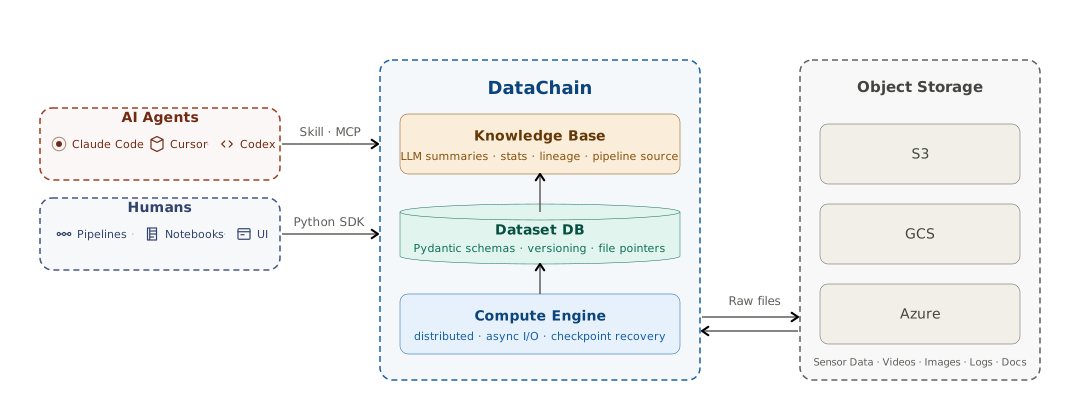
DataChain has three components. Together they implement the data harness as a single Python library plus an agent-facing skill and MCP layer. The user writes one chain; the boundaries are invisible at the surface and total underneath.
- Compute Engine runs heavy Python work over files in object storage: LLM calls, model inference, multimodal extraction, expensive per-row I/O. Parallel by default, async over network round-trips, distributed across machines through Studio, checkpoint-recoverable. This is the only component that can answer a question for which no materialised result exists yet.
- Dataset DB holds the typed, versioned datasets every chain deposits and serves filter, join, group_by, and similarity-search operations at warehouse speed over them. The dataset registry, provenance, and warehouse-speed querying are properties of the Dataset DB itself, not separate services next to it.
- Knowledge Base compiles the Dataset DB into agent-readable pages: schema, lineage, previews, links. Reaches Claude Code, Cursor, and Codex through the Skill and MCP layer, architecturally separate from the Python library that holds the Compute Engine and the Dataset DB. Agents read here first; they query the Dataset DB when summaries are not enough; they trigger Compute Engine work only when nothing higher answers.
The transpiler dispatches per-row Python to the Compute Engine and per-column expressions (filter, join, group_by, similarity) to the Dataset DB. Pydantic is the shared type system: chains carry Python types into the Compute Engine and the same types out of the Dataset DB, with no separate schema registration.